
One day in Copenhagen
3 stops, about 50 min of walking in total.
- Day 1: Kastellet and the Little Mermaid · Nyhavn and FrederiksstadenThe Little Mermaid → Nyhavn → Tivoli GardensOpen in Google Maps
Denmark
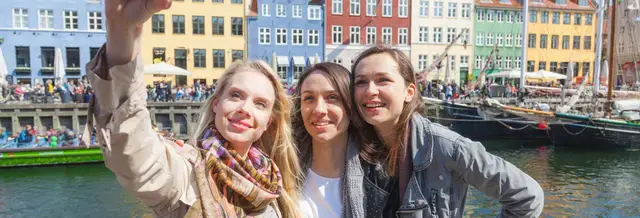
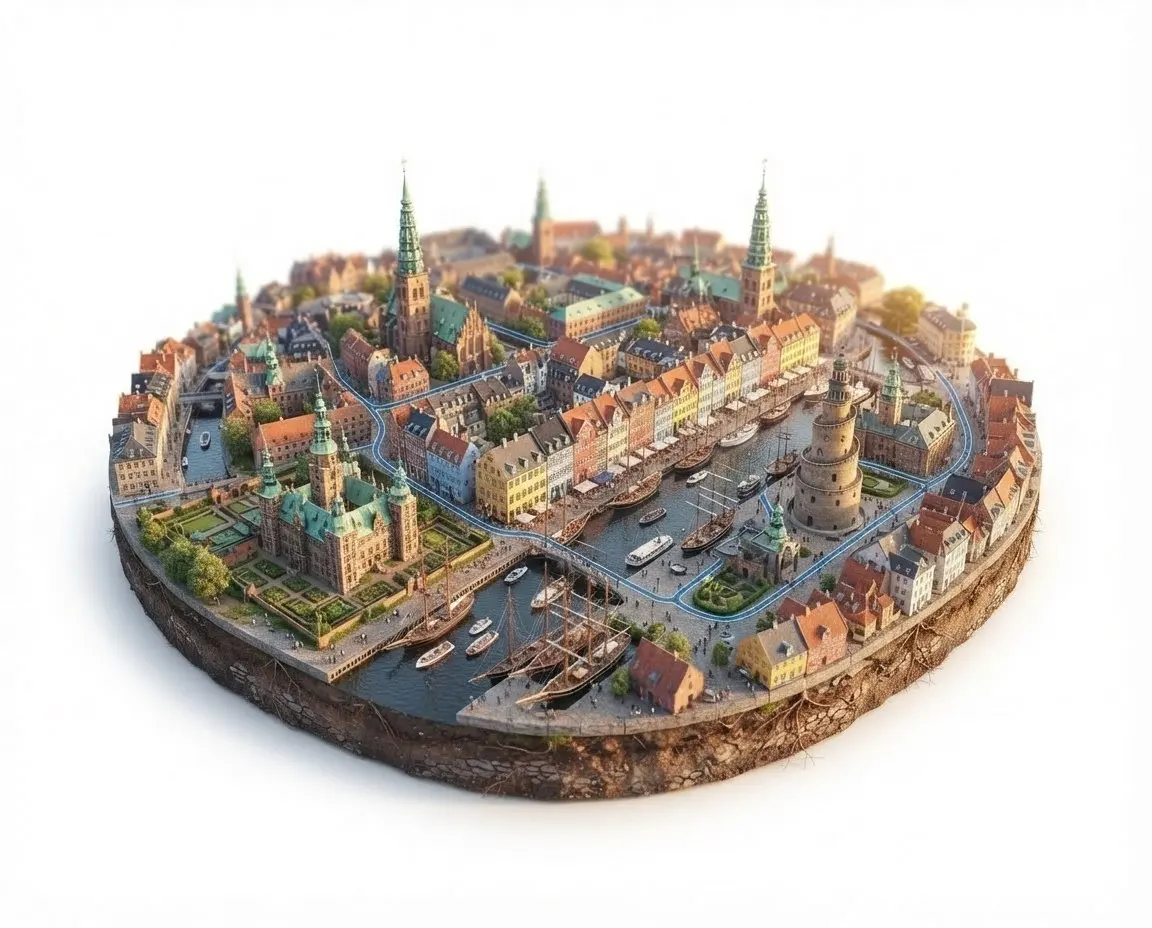
Copenhagen is a compact capital of palaces, canals and museums. Nyhavn and Amalienborg sit on the harbour side, Christiansborg and the National Museum on the island of Slotsholmen, and Tivoli beside the main station. Most royal sights are closed on Mondays from November to December, so plan around the calendar.
Data checked on November 13, 2026
Free walking tour
A guided walk gives you the layout of Copenhagen before you go off on your own. You book a place for free and tip the guide at the end.
See the free tourTickets and tours you book online with a booking partner, each with a photo from the partner.
Partner link, opens in a new tab.
Each plan is built from the stop base, with visit time, the walk between stops and a lunch break. Open one and set your pace and arrival day.
3 stops, about 50 min of walking in total.
7 stops, about 1 h 40 of walking in total.
11 stops, about 1 h 46 of walking in total.
May to September is the mildest period, with average highs from 15.8 degrees in May to 22.7 in July and 7 to 10 rain days a month. From November to February highs stay between 3 and 8 degrees, and Tivoli has its Christmas season from 13 November to 3 January. The winter hours of the palaces and museums are shorter, with Monday closing at several of them.
Climate averages: Danish Meteorological Institute, period 1991 to 2020. Rain day: 1 mm or more.
5 to 11 °C · about 7 rainy days a month
Highs go from about 6 degrees in March to 16 in May, with 7 to 8 rain days a month. Tivoli opens for Easter on 19 March 2027, and Rundetaarn moves to its summer hours on 1 April.
What to wear: Bring layers and a light waterproof jacket.
13 to 21 °C · about 8 rainy days a month
Highs are 19 to 23 degrees from June to August and nights stay around 12 to 14. Rundetaarn is open daily from 10:00 to 20:00 and Amalienborg Museum opens every day.
What to wear: Wear light clothes and comfortable shoes, and carry a light jacket for the evening.
7 to 12 °C · about 10 rainy days a month
Highs go from about 17 degrees in September to 12 in October and 8 in November, with 9 to 10 rain days a month. Rosenborg and Amalienborg close on Mondays from November.
What to wear: Bring a warm layer, a waterproof jacket and shoes for wet pavement.
1 to 4 °C · about 8 rainy days a month
Highs are 3 to 5 degrees and lows around 1 to 2, with 6 to 10 rain days a month. Tivoli has its Christmas season, and the palaces and museums close earlier and often on Mondays.
What to wear: Wear a warm coat, a hat and gloves, and shoes that cope with wet streets.
Copenhagen has 6 to 10 rain days a month, so keep an umbrella. The National Museum, the Glyptotek, Rosenborg, Christiansborg, Amalienborg Museum, the Design Museum and Torvehallerne are indoors. Keep Nyhavn, Kastellet, the Little Mermaid and the towers for a dry spell.
Stops under a roof
Even in July the average high is about 23 degrees, so heat is rarely a problem. On a sunny day carry water and sunscreen for the open stops such as Nyhavn and Kastellet. Museums and churches give a cool break in the middle of the day.
Better outdoors
Per person, without the hotel. Tickets are the prices of the stops in each plan, read on the official sites. Food and transport come from the city figures.
| Plan | Tickets | Transport | Food | Total |
|---|---|---|---|---|
| 1 day | DKK 230 | DKK 100 | DKK 321 to DKK 630 | DKK 651 to DKK 960 |
| 2 days | DKK 660 | DKK 200 | DKK 643 to DKK 1,260 | DKK 1,503 to DKK 2,120 |
| 3 days | DKK 945 | DKK 300 | DKK 964 to DKK 1,890 | DKK 2,209 to DKK 3,135 |
Open sandwiches on dark rye bread with fish, meat or egg and toppings, eaten at lunch.
Layered pastries such as the cinnamon roll, found in bakeries and cafes in the morning.
Marinated herring served on rye bread, a traditional dish at lunch.
Pan-fried Danish meatballs, served with potatoes and cabbage.
Hot dogs from a street stand with remoulade and fried onions, a quick snack.
Local lagers and craft beers are served in bars and restaurants.
Boat tours leave from Nyhavn and show the harbour and the canals from the water.
Walk between the stalls for fish, vegetables, pastries and coffee.
In the Christmas season the gardens are lit with thousands of lights.
Follow the paths on the ramparts, then continue to the Little Mermaid.
Rundetaarn has a spiral ramp, and the Church of Our Saviour has an outside staircase on its spire.
Most visitors arrive by plane at Copenhagen Airport or by train at the Central Station. The City Pass Small covers the trip from the airport to the centre, because it includes zones 1 to 4. Check the operator's website for current journey times.
The centre is easy on foot, and Nyhavn, Amalienborg, Rosenborg and the Round Tower can be linked in one walk. A single ticket costs from 24 DKK for two zones, and a 24-hour City Pass Small costs 100 DKK, so it pays off after about four single rides. Kastellet, Christianshavn and the Glyptotek are further apart.
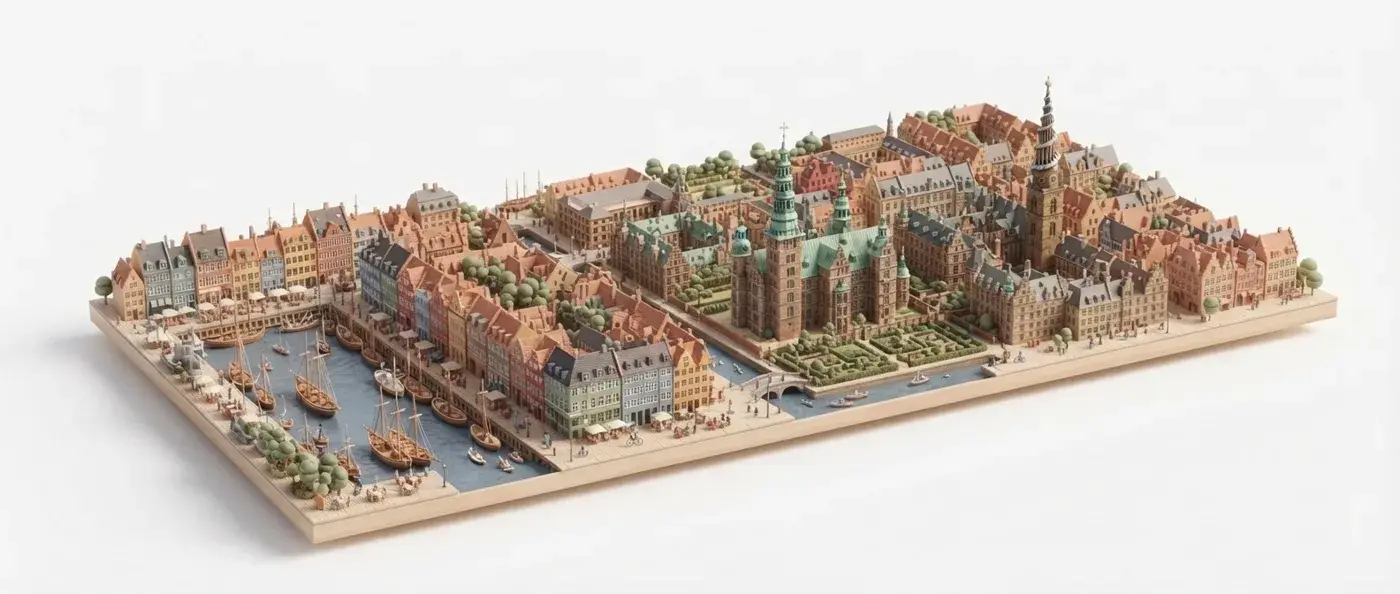
Every stop has its own page with opening days, ticket price, how to get there and where it fits in the itineraries.
Nyhavn and Frederiksstaden
The old harbour canal with colourful townhouses, restaurants along the quay and canal boats leaving from the water.
Tivoli and City Hall Square
An amusement park and garden in the middle of the city, with rides, restaurants, shows and, in winter, a Christmas market.
Old Town and Rosenborg
A Renaissance castle built by Christian IV in the King's Garden, home to the Danish crown jewels.
Booking advisedChristiansborg and the National Museum
A palace on Slotsholmen where you can visit the Royal Reception Rooms, the ruins, the kitchen and the stables.
Nyhavn and Frederiksstaden
A museum in Christian VIII's Palace that shows the life of the royal family on the palace square.
Old Town and Rosenborg
A 17th-century tower with a spiral ramp that leads up to a viewing platform over the old town.
Christiansborg and the National Museum
A museum with collections that run from the Vikings and ancient treasures to everyday life in modern times.
Tivoli and City Hall Square
An art museum beside Tivoli, with palm trees and a Mediterranean atmosphere.
Christianshavn
A Baroque church in Christianshavn with a spire you can climb by an outside staircase, 86 metres up.
Booking advisedKastellet and the Little Mermaid
The small bronze statue on the Langelinie waterfront, inspired by Hans Christian Andersen's fairy tale.
Old Town and Rosenborg
A market with stalls for fish, vegetables, smorrebrod, coffee and pastries.
Kastellet and the Little Mermaid
A fortress and green park by the harbour that is still used as a military barracks.
Nyhavn and Frederiksstaden
A domed church near Amalienborg that is free to visit outside service times.
Nyhavn and Frederiksstaden
Designmuseum Danmark on Bredgade, with exhibitions and a free garden, cafe and shop.
Wi-Fi in hotels, cafés and airports is shared with other guests. A VPN encrypts the connection between your phone or laptop and the VPN's server, which helps when you check email or your bank on the road.
See NordVPNOne day covers Nyhavn, Amalienborg, Rosenborg or Christiansborg, and Tivoli in the evening if you start at opening time. A second day lets you add the National Museum, the Glyptotek, Rundetaarn and the Church of Our Saviour. Check closing days first, since most palaces and museums close on Mondays from November to December.
Rosenborg sells timed tickets that sell out in peak season, so book it online. The Church of Our Saviour recommends booking the tower. Rundetaarn only sells tickets at the door, and most other stops can be visited with a ticket bought on the day.
Yes, the old town, Nyhavn, Amalienborg and Rosenborg can be walked, while Kastellet and Christianshavn are a bit further. A single ticket costs from 24 DKK for two zones and a 24-hour City Pass Small costs 100 DKK. The pass pays off if you take more than about four single rides.
May to September has the mildest weather, with average highs from about 16 to 23 degrees and 7 to 10 rain days a month. In winter highs are 3 to 5 degrees, and Tivoli is open for Christmas from 13 November to 3 January. Check hours in winter, because many sights close on Mondays.