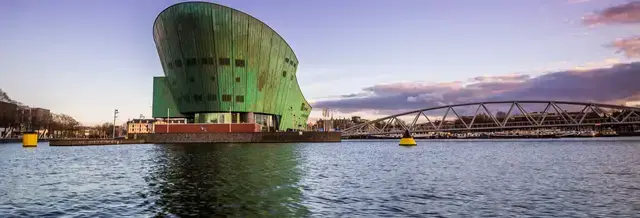
One day in Amsterdam
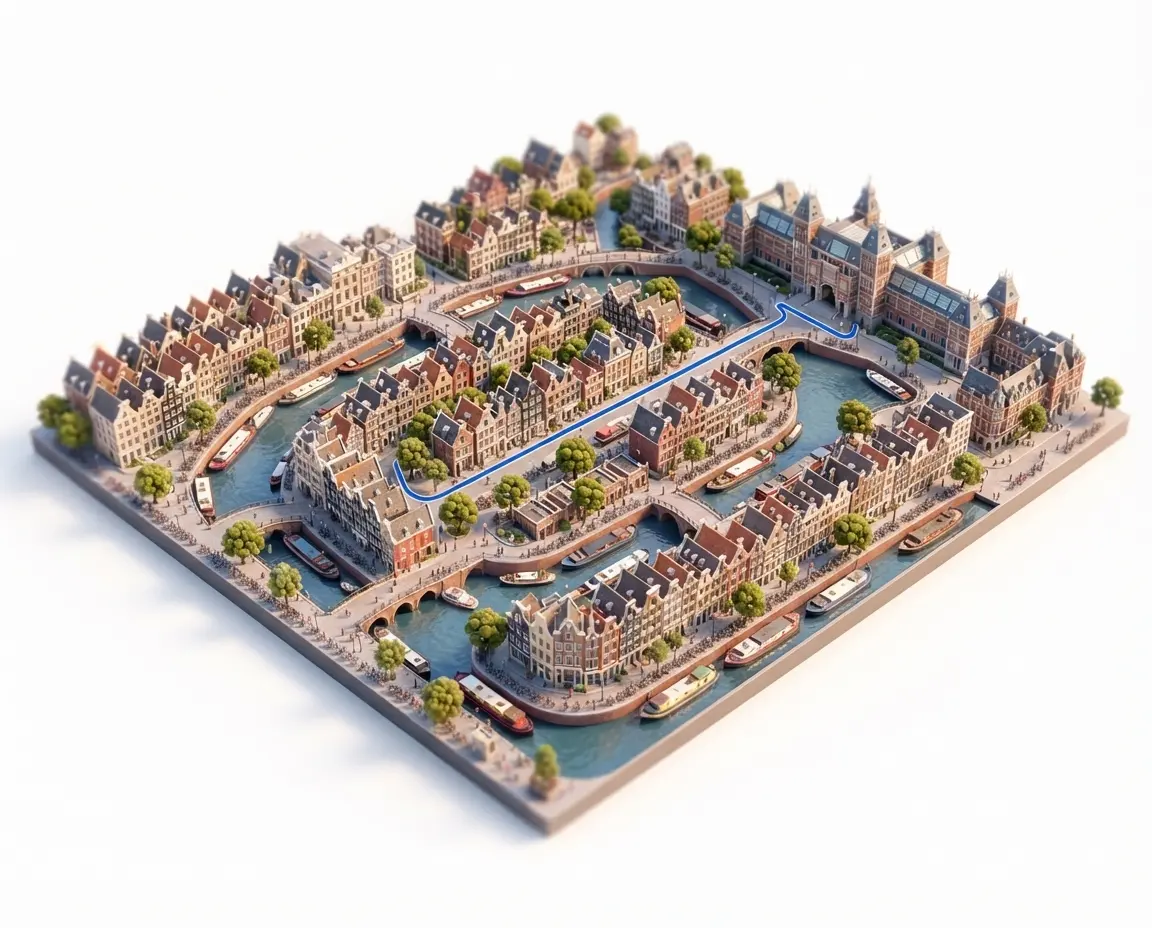
4 stops, about 19 min of walking in total.
- Day 1: Museum Quarter · JordaanRijksmuseum → Van Gogh Museum → Vondelpark → Anne Frank HouseOpen in Google Maps
Netherlands
Amsterdam is compact, and most of it sits inside a ring of canals you can cross on foot. The big museums cluster around Museumplein, while the old centre, the Jordaan and the markets are a short walk or tram ride away.
Data checked on October 4, 2026
Tickets and tours you book online with a booking partner, each with a photo from the partner.
Partner link, opens in a new tab.
Each plan is built from the stop base, with visit time, the walk between stops and a lunch break. Open one and set your pace and arrival day.
4 stops, about 19 min of walking in total.
11 stops, about 1 h 28 of walking in total.
15 stops, about 2 h 49 of walking in total.
April to June and September work best, with highs of 14 to 20 degrees, rain on 9 to 11 days a month and shorter queues than in summer. July and August are the busiest months, although highs of 22 to 23 degrees are mild rather than hot. Late April fills up around King's Day on 27 April, and the wettest weather runs from October to January.
Climate averages: Royal Netherlands Meteorological Institute.
6 to 14 °C · about 9 rainy days a month
Highs rise from about 10 degrees in March to 18 in May, and April has the fewest rainy days of the year, about nine. Spring flowers appear in the parks, and King's Day on 27 April puts crowds on the streets and canals.
What to wear: Pack layers, a light waterproof jacket and comfortable shoes that cope with cobbles.
13 to 22 °C · about 11 rainy days a month
Highs run from 20 to 23 degrees, with rain on 10 to 12 days a month and light until late in the evening. The canals, the cruise boats and the big museums are at their busiest.
What to wear: Wear light clothes with a thin jacket for evenings, and carry a rain layer because showers are common.
8 to 15 °C · about 12 rainy days a month
September stays mild at about 19 degrees, October falls to 15 and November to 10, with rain on 11 to 13 days a month. Days shorten quickly and the crowds thin after September.
What to wear: Bring a waterproof coat, a warm layer and shoes that handle wet cobbles.
1 to 7 °C · about 12 rainy days a month
Highs sit at 6 or 7 degrees and nights fall to 1 or 2, with rain on 11 to 14 days a month and short, light snow possible in January and February. Daylight lasts under eight hours in December, so plan museums for the middle of the day.
What to wear: Wear a warm coat, hat and gloves, and shoes with grip because canal paths and bridges can be slippery in frost.
Rain falls on 9 to 14 days a month, so plan an indoor option for every day. The Rijksmuseum, the Van Gogh Museum, the Anne Frank House, the Rembrandt House, the Royal Palace, NEMO and the Heineken Experience are all indoors, and showers are often short enough for a cafe stop to wait out. Book timed tickets ahead, because wet days push more people inside.
Stops under a roof
Heat is rare, with July and August highs averaging 22 to 23 degrees, although the record is above 36. On a hot day, walk the canals early or after 18:00, use the museums in the afternoon, and take shade under the trees along the canals and in Vondelpark. The sun sets late in summer, which suits the A'DAM Lookout and an evening canal walk.
Better outdoors
Per person, without the hotel. Tickets are the prices of the stops in each plan, read on the official sites. Food and transport come from the city figures.
| Plan | Tickets | Transport | Food | Total |
|---|---|---|---|---|
| 1 day | €66.50 | €10 | €44 to €68 | €121 to €145 |
| 2 days | €103.50 | €20 | €88 to €136 | €212 to €260 |
| 3 days | €159.45 | €30 | €132 to €204 | €322 to €394 |
Two thin waffles joined by caramel syrup. Fresh ones are made at market stalls, and a warm one is often rested on top of a coffee cup to soften.
Raw herring served with chopped onions and pickles at fish stalls, traditionally held by the tail. New-season herring appears in early summer.
Deep-fried balls with a creamy beef filling, served with mustard and usually with a beer in a brown cafe. Let them cool first, because the inside is very hot.
Small, fluffy pancakes cooked in a special pan and served with butter and powdered sugar. They are sold at markets and in pancake houses.
Rice with a spread of small Indonesian dishes, a legacy of the colonial era that gave the city a large Indonesian food scene. It is ordered as a set and works best shared.
Gouda, Edam and aged cheeses are cut for tasting in cheese shops and at market stalls. Try a young one and an aged one side by side.
Covered boats leave from several quays and take about an hour through the main canals. Evening trips show the bridges lit.
Rent a bike and follow the river south, past windmills and villages beyond the ring road. Keep to the bike paths and lock the bike every time you stop.
A free ferry crosses from behind Centraal to the old shipyard area in the north, where studios and street art fill the former industrial sites.
These old pubs with dark wood and small tables suit a slow beer and a plate of bitterballen. The Jordaan has many of them.
Haarlem is about 20 minutes from Centraal by train, with a compact old centre, a large church and a quieter pace than Amsterdam.
From Schiphol, trains run to Amsterdam Centraal in about 15 to 20 minutes from the station under the terminal, which makes them the simplest option. Buses and taxis also run, but they share the road with the traffic. Centraal is also the main station for international trains, and trams, the metro and the IJ ferries all start outside its doors.
The centre is compact, and walking is the best way to see the canal ring, the Jordaan and the Nine Streets. Trams and the metro cover the longer distances, and free ferries cross the IJ from behind Centraal Station to Amsterdam Noord. A GVB day ticket gives 24 hours of unlimited rides and pays off from about three separate trips.
Every stop has its own page with opening days, ticket price, how to get there and where it fits in the itineraries.
Museum Quarter
The national museum of the Netherlands, with Rembrandt's Night Watch and Vermeer's Milkmaid among 8,000 works on show. Most people follow the highlights route, which the museum says takes about an hour, and then stay longer.
Book aheadMuseum Quarter
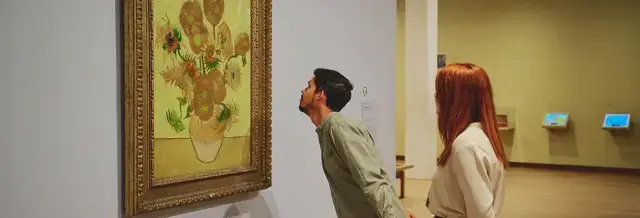
The largest collection of Van Gogh paintings and letters, arranged in the order of his life. Expect a one-way route with plenty of reading.
Book aheadJordaan
The canal house where Anne Frank and seven others hid during the war. The route is a narrow one-way path through the rooms, and the museum says a visit takes about an hour.
Book aheadCanal Ring
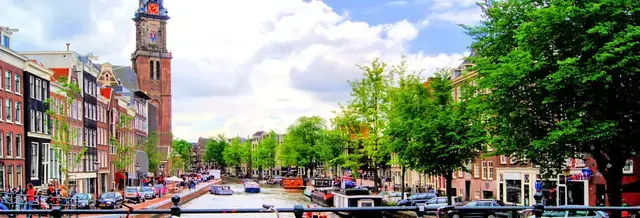
The three main canals, Herengracht, Keizersgracht and Prinsengracht, form a UNESCO-listed arc of 17th-century houses. Walking a stretch with side trips over the bridges is the simplest way to see Amsterdam.
Eastern Docks and Jewish Quarter
The house where Rembrandt lived and worked for almost twenty years, now a museum. The rooms are small, so the visit is short.
Booking advisedOld Centre
A 17th-century town hall that is now the King's reception palace on Dam Square. You walk through the marble Citizens' Hall and the council rooms with a free audio guide.
Jordaan
A former working-class district west of the canal ring, with narrow streets, small galleries and brown cafes. It is best on foot, without a plan.
Museum Quarter
Amsterdam's biggest city park, ten minutes on foot from the Rijksmuseum. It has ponds, a rose garden, playgrounds and cafes.
De Pijp
A long street market in De Pijp with fresh fish, cheese, stroopwafels and clothes. Eat as you walk and look at the stalls on both sides.
Amsterdam Noord
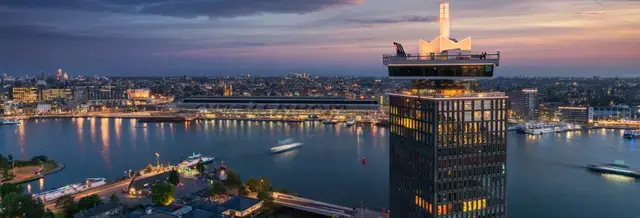
A rooftop deck on the A'DAM tower in Amsterdam Noord with 360 degree views of the city and the IJ. The free ferry from behind Central Station takes a few minutes.
Old Centre
A quiet courtyard of old houses and a small chapel, a few steps from Kalverstraat. People still live here, so keep your voice low and stay on the paths.
Old Centre
The central square, with the Royal Palace, the Nieuwe Kerk and the National Monument. Most visitors pass through it, so you only need a short stop.
Old Centre
Amsterdam's oldest building, a medieval church in the Red Light District that now hosts art exhibitions. The floor is made of gravestones.
De Pijp
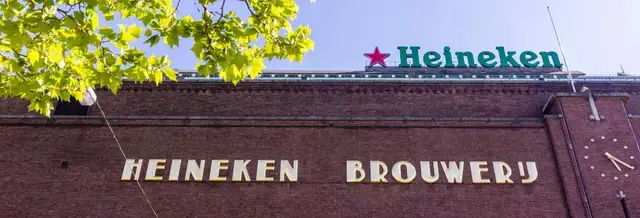
A self-guided walk through the old Heineken brewery with tasting rooms and interactive displays. The brewery says the tour takes 1.5 to 2 hours.
Booking advisedEastern Docks and Jewish Quarter
A hands-on science centre in a ship-shaped building at the harbour, with experiments that suit children.
Booking advisedCanal Ring
Nine small cross streets between the main canals, lined with vintage shops, independent boutiques and coffee bars. A good break between museums.
Wi-Fi in hotels, cafés and airports is shared with other guests. A VPN encrypts the connection between your phone or laptop and the VPN's server, which helps when you check email or your bank on the road.
See NordVPNOne day covers a canal walk and one or two major sights, for example the Rijksmuseum or the Van Gogh Museum with a booked slot. You will have to choose, because the Anne Frank House and both big museums each take a large part of a day.
Yes for the Rijksmuseum, the Van Gogh Museum and the Anne Frank House, which all require a time slot. Anne Frank tickets are sold online only, released every Tuesday for a visit six weeks later. The Heineken Experience and NEMO also use timed tickets and fill up at busy times.
The museum says you can see the highlights in about an hour, but the collection is large. We plan about three and a half hours, including queue and security.
The Rijksmuseum, Van Gogh Museum, Anne Frank House, Rembrandt House, NEMO and Heineken Experience are all indoors. Book the timed ones in advance, because rainy days send more people inside.