One day in Paris
4 stops, about 22 min of walking in total.
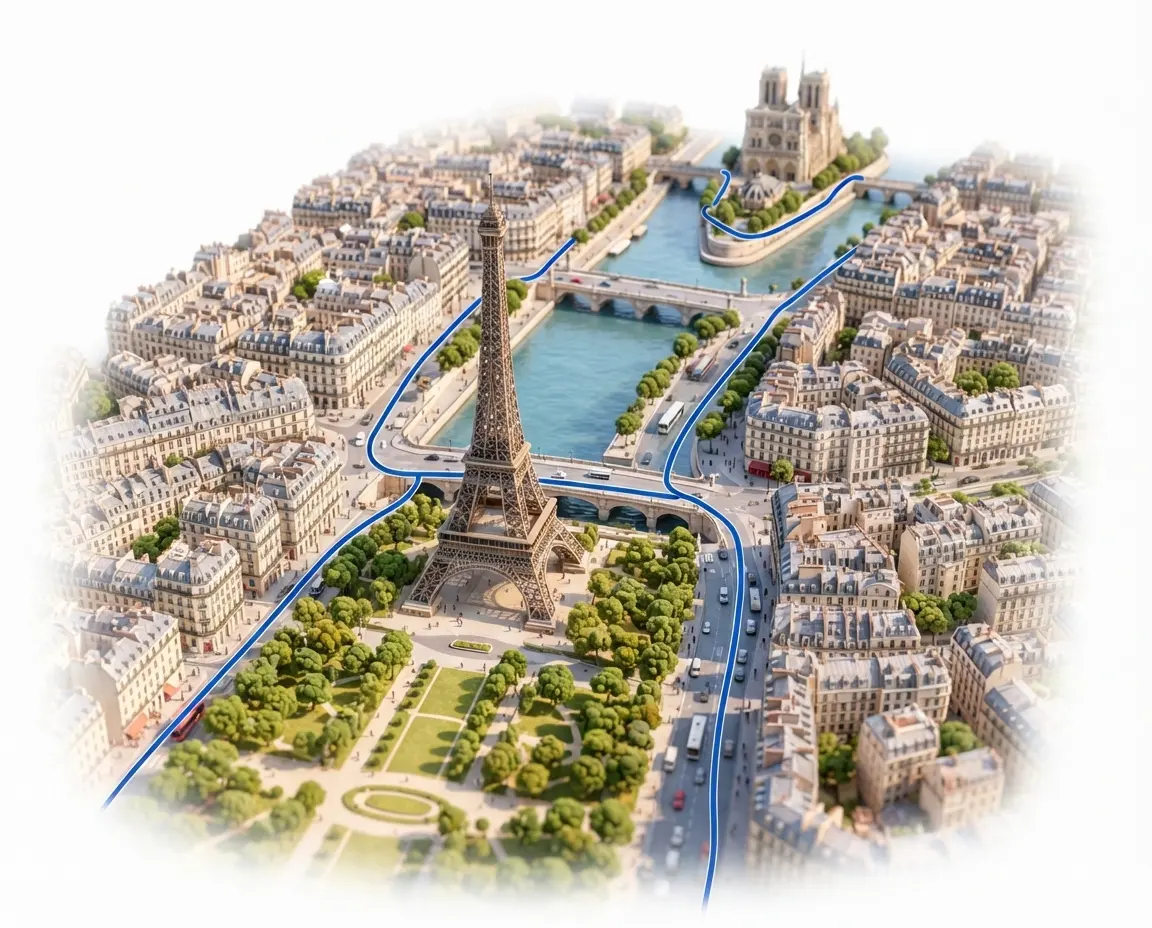
- Day 1: Île de la Cité · Louvre, Tuileries and OpéraNotre-Dame Cathedral → Sainte-Chapelle → Louvre Museum → Eiffel TowerOpen in Google Maps
France
Paris is built around the Seine, and each area on it works as a half day on foot. The big sights run on entry times and security queues, so your schedule matters more than your route. The metro links most areas in a few stops.
Data checked on October 4, 2026
Free walking tour
A guided walk gives you the layout of Paris before you go off on your own. You book a place for free and tip the guide at the end.
See the free tourTickets and tours you book online with a booking partner, each with a photo from the partner.
Partner link, opens in a new tab.
Each plan is built from the stop base, with visit time, the walk between stops and a lunch break. Open one and set your pace and arrival day.
4 stops, about 22 min of walking in total.
8 stops, about 1 h 33 of walking in total.
12 stops, about 1 h 54 of walking in total.
April, May, September and October are the easiest months, with highs from about 17 to 22 °C, fewer people than in summer and no heat to plan around. July and August are the busiest and the hottest, with highs near 26 °C, and some small shops and restaurants close for part of August. Winter is cold and grey with short days, but the big museums are calmer then.
Climate averages: Météo-France.
8 to 17 °C · about 9 rainy days a month
Highs climb from 13 °C in March to 20 °C in May, and rain falls on about nine days a month. Gardens come into leaf and the queues are shorter than in summer.
What to wear: Bring layers, a light waterproof jacket and shoes that handle wet cobbles.
15 to 25 °C · about 8 rainy days a month
July and August average 26 °C at the warmest, and heat waves can push well past 35 °C. The evenings are long, the quays fill up after work, and the main sights have their longest queues.
What to wear: Pack light clothes, a hat and sunscreen, plus a scarf or shirt that covers your shoulders for churches.
10 to 17 °C · about 9 rainy days a month
September is still warm at a 22 °C average high, while November drops to 11 °C and the rain days rise to ten a month. October is quiet enough to walk most areas without a plan.
What to wear: Dress in layers with a proper rain jacket, and take closed shoes with a good grip.
3 to 8 °C · about 10 rainy days a month
December to February highs sit between 8 and 9 °C, nights are close to freezing, and daylight ends before 17:30 in midwinter. Snow falls on a few days a year and rarely lasts.
What to wear: A warm coat, hat, gloves and waterproof shoes will do more for you than extra layers indoors, because museums are heated.
It rains on about nine or ten days a month all year, so keep a wet-day plan ready. The Louvre, Orsay, the Orangerie, Sainte-Chapelle, the Palais Garnier and the Panthéon all work in rain, and Notre-Dame is free to walk through. The Eiffel Tower summit loses its view in low cloud, and the official site says access can be limited in severe weather.
Stops under a roof
Heat is the problem in July and August, when the Eiffel Tower queue and the 284 steps of the Arc de Triomphe have little shade. Spend the middle of the day in a museum or a church, and use the early morning and the evening for open-air stops. Carry water, and use the public drinking fountains in parks and squares.
Better outdoors
Per person, without the hotel. Tickets are the prices of the stops in each plan, read on the official sites. Food and transport come from the city figures.
| Plan | Tickets | Transport | Food | Total |
|---|---|---|---|---|
| 1 day | €90.70 | €12.30 | €37 to €60 | €140 to €163 |
| 2 days | €122.70 | €24.60 | €73 to €120 | €220 to €267 |
| 3 days | €160.70 | €36.90 | €110 to €180 | €307 to €378 |
The usual breakfast, bought at a bakery counter and eaten standing or on a bench. Weekday mornings are the best time, because the trays are fresh and the lines are short.
A baguette with ham and butter, simple and cheap, and the standard lunch to eat in a park or by the river.
Grilled steak with chips, on the menu in almost every brasserie. Ask for the cooking you want: saignant is rare and à point is medium.
Onion soup with melted cheese on toast, served in brasseries in cooler months and late in the evening.
A savoury buckwheat galette first, then a sweet crêpe, usually with cider. Crêperies are easy to find around Montparnasse and the Latin Quarter.
A cheese course after the main dish and before dessert. A small plate is plenty for two.
Walk the lower quays from the Île Saint-Louis toward the Louvre in the hour before dark, when the bridges light up and the benches fill.
The 19th-century glass-roofed arcades near the grands boulevards hold old shops, tea rooms and bookstalls, and they are dry in rain.
Paris has street markets on most days, with cheese, bread, fruit and cooked food. Go before noon, when the stalls have everything and the crowds are thin.
The tower sparkles for a few minutes at the start of each hour after nightfall, and the Trocadéro terrace or the lawns of the Champ de Mars make a free viewing spot.
A hilly park in the north-east with a lake, a cliff and a small temple, good for an afternoon away from the central crowds.
From Charles de Gaulle airport, RER B reaches the centre in roughly 35 to 45 minutes, with stops at Gare du Nord, Châtelet-Les Halles and Saint-Michel Notre-Dame. From Orly, Métro 14 now serves the airport and takes about 25 to 30 minutes to Châtelet. Île-de-France Mobilités sells a separate airport ticket at €14 a trip, and the day pass does not cover the airports. The main stations, Gare du Nord, Gare de l'Est and Gare de Lyon, all have metro lines.
The metro is the quickest way between the Left Bank, Montmartre and the east, and the centre around the Louvre, the Île de la Cité and the Latin Quarter can be walked in about half an hour. Île-de-France Mobilités lists a single metro, train or RER ticket at €2.55 and the Forfait Navigo Jour day pass at €12.30, so the pass only pays off from a fifth ride. Cardboard t+ tickets can be used until 15 December 2026, so get a Navigo Easy pass or use the phone app instead.
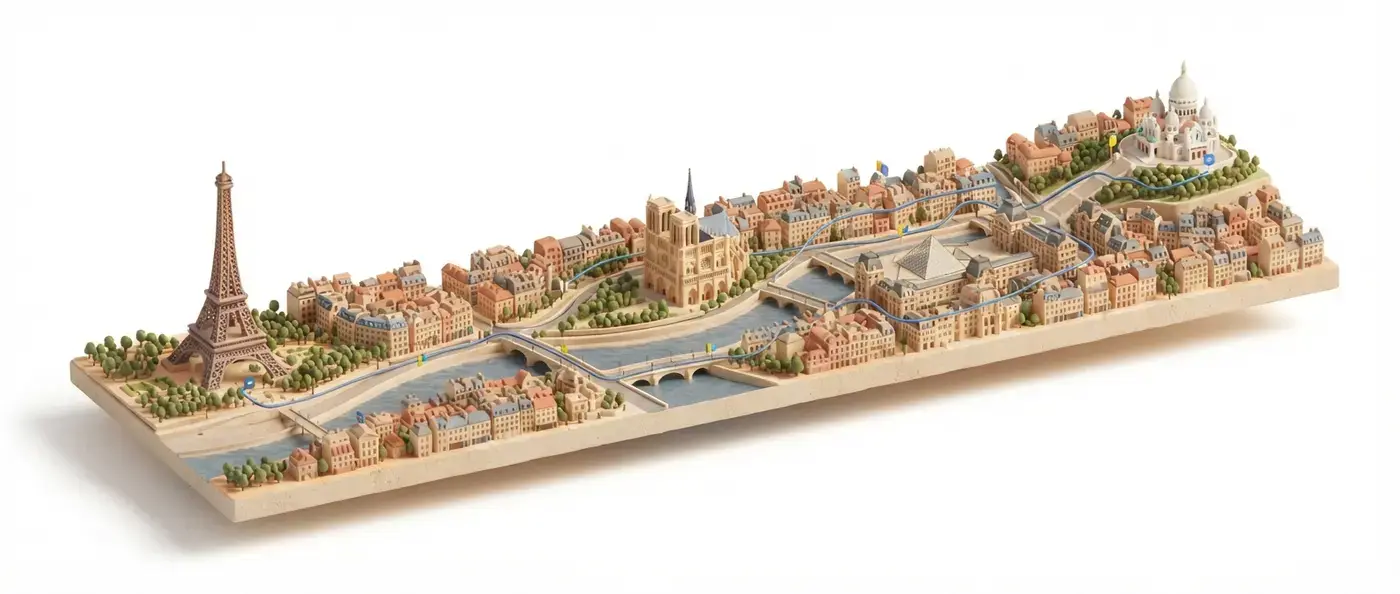
Every stop has its own page with opening days, ticket price, how to get there and where it fits in the itineraries.
Eiffel Tower and the west
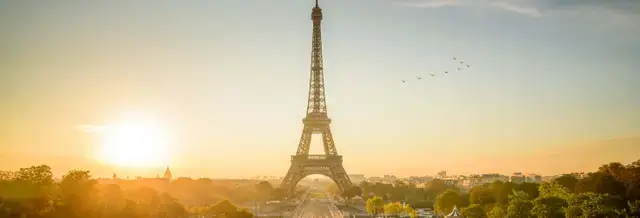
The iron tower on the Champ de Mars, with lifts or stairs to the second floor and a lift to the summit. Allow time for the security check at the entrance and again at the pillar before you go up.
Booking advisedLouvre, Tuileries and Opéra
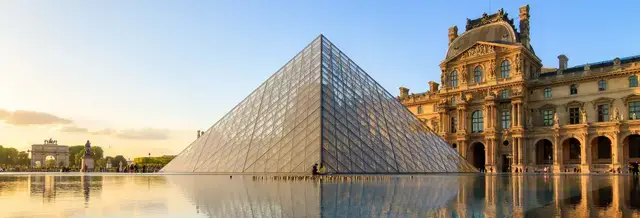
The largest museum in Paris, in a former royal palace. The collection is too big to see in one visit, so choose a few wings and expect a security queue at the Pyramid.
Book aheadÎle de la Cité
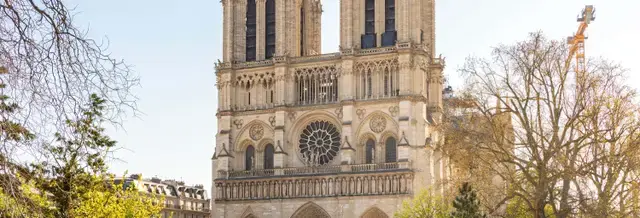
The restored cathedral on the Île de la Cité. Entry is free, and you queue to walk through the nave.
Booking advisedMontmartre
The white basilica on the Montmartre hill. Entry to the nave is free, and the front steps look over the whole city. The dome climb is a separate visit.
Eiffel Tower and the west
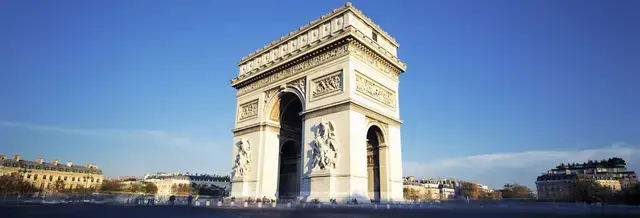
The monument at the top of the Champs-Élysées, with a terrace reached by 284 steps. The official site says the lift is under maintenance until further notice, so the climb is by stairs only. Reach it by the underpass, not by crossing the roundabout.
Booking advisedLeft Bank
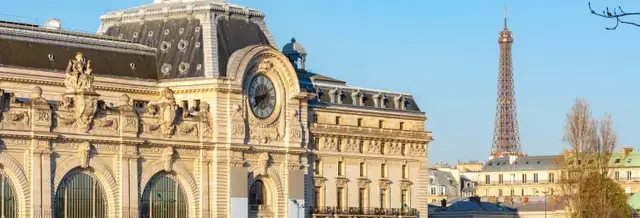
A former railway station that holds a large Impressionist and Post-Impressionist collection. The museum notes some renovation work, so check access conditions on its page.
Booking advisedÎle de la Cité
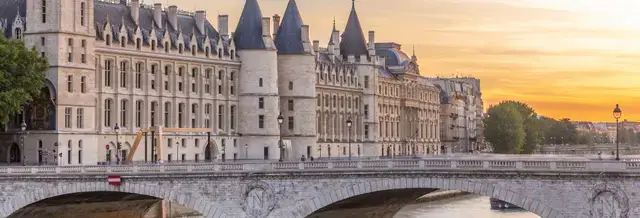
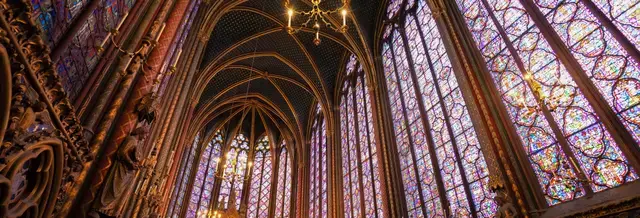
A Gothic royal chapel inside the Palais de la Cité, known for its walls of stained glass. Expect a security check, and leave large bags at your hotel because they are not allowed.
Book aheadMarais and the east
A neighbourhood of 17th-century mansions, small museums, shops and cafés in the 3rd and 4th districts. It works as a walk with no fixed route.
Left Bank
A large formal park on the Left Bank, with chairs by the pond and tree-lined paths.
Left Bank
The student district around the Sorbonne on the Left Bank, with narrow streets, bookshops and cafés. Its sights include the Panthéon and the Luxembourg Gardens.
Left Bank
A neoclassical building that is now the burial place of figures from French history. The crypt is the main part of the visit.
Marais and the east
A large hillside cemetery with the graves of many artists and writers. Entry is free, and the paths are long and sloped, so wear comfortable shoes.
Louvre, Tuileries and Opéra
The 19th-century opera house. The self-guided visit covers the grand staircase, the foyers and the library-museum, and the auditorium when it is open.
Book aheadLouvre, Tuileries and Opéra
A small museum in the Tuileries Garden, best known for Monet's Water Lilies in two oval rooms. It is easy to combine with the Louvre or a walk to Place de la Concorde.
Booking advisedMarais and the east
A tree-lined canal with iron footbridges and locks, and cafés along the quays. It is a place to walk or sit, not a sight to tick off.
Wi-Fi in hotels, cafés and airports is shared with other guests. A VPN encrypts the connection between your phone or laptop and the VPN's server, which helps when you check email or your bank on the road.
See NordVPNOne day covers a few headline sights, not the museums in depth. Pick one museum or the Eiffel Tower, add a neighbourhood, and book timed tickets first. The Louvre alone can fill most of a day.
Three days fit the main sights, a museum or two and a couple of neighbourhoods at an unhurried pace. They do not cover every museum. If you want both the Louvre and Orsay in depth, plan around their closing days.
Book the Louvre, Sainte-Chapelle and the Palais Garnier, which use timed tickets. The Eiffel Tower is worth booking, especially for the summit. Notre-Dame offers an optional free time slot. Neighbourhoods and parks need nothing.
Orsay is closed on Mondays, and the Louvre and the Orangerie on Tuesdays. The Eiffel Tower, Sacré-Cœur, the Panthéon and Sainte-Chapelle open every day. Check the official page for your date before you fix your plan.