One day in Barcelona
4 stops, about 43 min of walking in total.
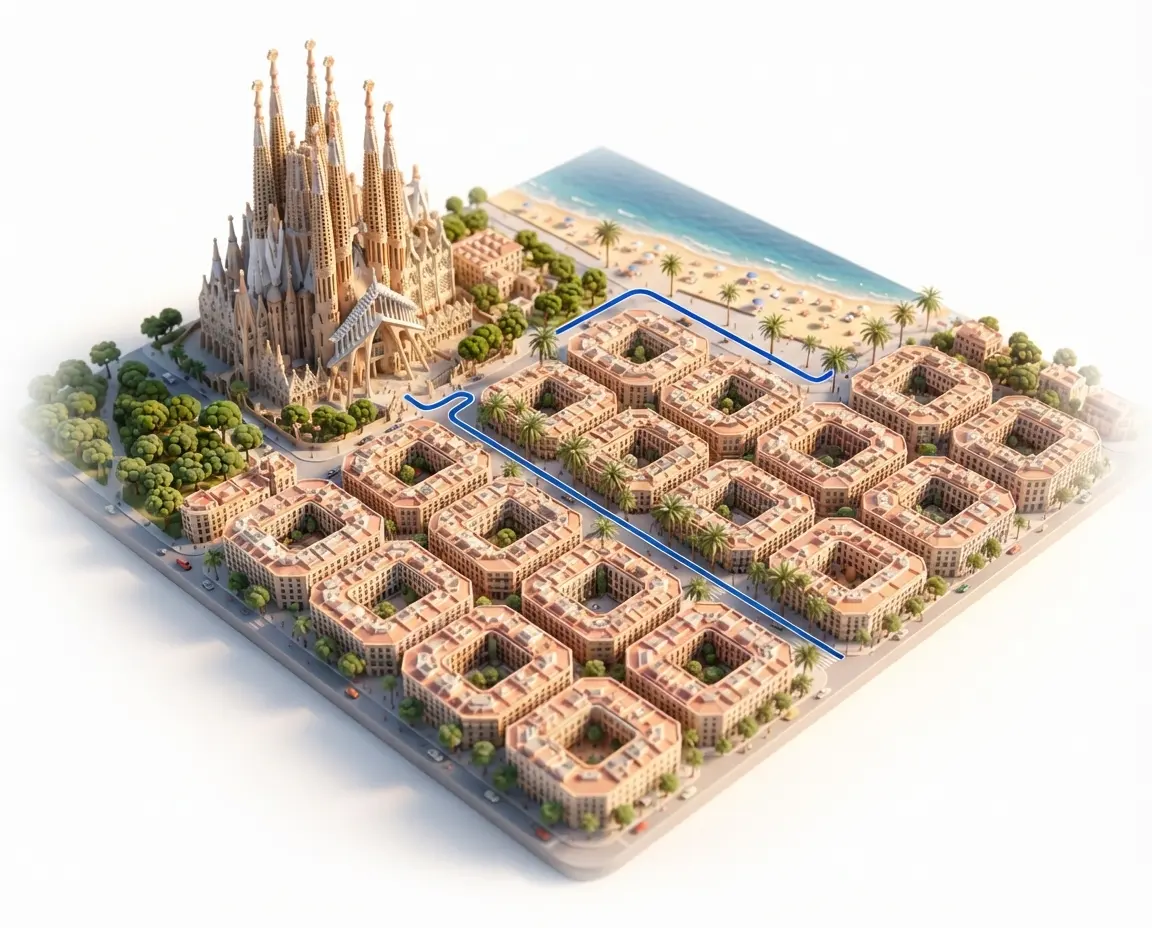
- Day 1: Gràcia and Park Güell · Eixample and Sagrada FamíliaPark Güell → Sagrada Família → Casa Batlló → GràciaOpen in Google Maps
Spain
Barcelona is a seaside city of wide avenues, a medieval core and a long list of Modernista buildings by Gaudí and his contemporaries. The main sights sit in a few zones that the metro connects well, and the beach is a short walk from the old town.
Data checked on October 4, 2026
Free walking tour
A guided walk gives you the layout of Barcelona before you go off on your own. You book a place for free and tip the guide at the end.
See the free tourTickets and tours you book online with a booking partner, each with a photo from the partner.
Partner link, opens in a new tab.
Each plan is built from the stop base, with visit time, the walk between stops and a lunch break. Open one and set your pace and arrival day.
4 stops, about 43 min of walking in total.
9 stops, about 1 h 13 of walking in total.
14 stops, about 1 h 26 of walking in total.
April, May, June and October are the best months: highs run from about 18 to 24 degrees and the queues at the big sights are shorter than in summer. July and August are the hottest and busiest months, with nights that stay near 23 degrees. October has the most rainy days of the year, but it is still warm enough for the streets and the waterfront.
Climate averages: Agencia Estatal de Meteorología.
13 to 18 °C · about 5 rainy days a month
Highs rise from about 16 degrees in March to 21 in May, and April has the most rainy days of the three months. Easter week fills the city and the hotels.
What to wear: Layers: a light jacket for mornings and evenings, and shoes that can handle several kilometres of old paving.
22 to 26 °C · about 3 rainy days a month
Highs reach 27 degrees in July and August, and nights stay near 22 or 23 with humidity around 75 percent. The old town and the beach are at their most crowded, and the hours from 13:00 to 17:00 are hard for walking.
What to wear: Light cotton, sunglasses, a hat and sandals, plus a scarf or thin layer for churches and air-conditioned museums.
16 to 22 °C · about 5 rainy days a month
September is still warm at about 25 degrees, then highs ease to 22 in October and 17 or 18 in November. September and October have the heaviest rain of the year, often as short, hard showers.
What to wear: Layers, a compact umbrella and shoes that cope with wet paving.
8 to 15 °C · about 4 rainy days a month
Days are mild, with highs around 14 or 15 degrees and lows near 8, and December has the least sunshine of the year. Crowds are the lightest, but several sights close earlier from November.
What to wear: A medium coat, a scarf and a light waterproof layer. Mornings and evenings feel colder than the daytime highs suggest.
Barcelona has about 48 days a year with measurable rain, most of them in spring and autumn. On a wet day, switch to the indoor stops: the Picasso Museum, the Palau de la Música, Casa Batlló, the Sagrada Família interior and the Boqueria market. The rooftop of La Pedrera closes in rain, and Park Güell, Montjuïc and Barceloneta are poor choices in a downpour.
Stops under a roof
July has more than 330 hours of sunshine, and highs sit near 27 degrees in July and August. Plan Park Güell, Montjuïc and the beach for the morning or the last hours of daylight, and keep the cathedral, the Boqueria or a museum for the hours from 13:00 to 17:00. Shade is thin on the Park Güell terrace, on the castle walls and on Barceloneta beach, so carry water and sunscreen.
Better outdoors
Per person, without the hotel. Tickets are the prices of the stops in each plan, read on the official sites. Food and transport come from the city figures.
| Plan | Tickets | Transport | Food | Total |
|---|---|---|---|---|
| 1 day | €73 | €12 | €35 to €52 | €120 to €137 |
| 2 days | €118 | €24 | €70 to €104 | €212 to €246 |
| 3 days | €170 | €36 | €105 to €156 | €311 to €362 |
Toasted bread rubbed with ripe tomato, olive oil and salt. It comes with almost every Catalan meal and goes with ham, cheese or anchovies.
A grilled Catalan pork sausage served over white beans. It is a plain, filling lunch dish and often appears on the set weekday menu.
Short noodles cooked in fish stock in a wide pan, in the way of paella, and served with seafood and aioli. Coastal restaurants, especially around Barceloneta, serve it at lunch.
Big spring onions grilled over fire and dipped in romesco sauce, eaten with a bib and your hands. The season runs from about late winter into spring.
A cold custard flavoured with citrus and cinnamon, topped with burnt sugar. It is the standard way to end a Catalan meal.
Vermouth poured over ice with an olive and a slice of orange, drunk before lunch with olives and chips. Weekend midday is the traditional time.
Sit on a terrace on Plaça del Sol or Plaça de la Virreina before lunch with a vermouth and something salty. Gràcia fills up around midday at weekends.
A hilltop in the Carmel district with remains of Civil War anti-aircraft batteries and wide views over the city and the sea. Bring water and arrive before the light goes.
A large fountain at the foot of Montjuïc with evening shows of water, light and music. It does not run every night, so check the city schedule first.
A flat path runs along the beaches from Barceloneta up the coast past Poblenou. Rent a bike for a few hours and ride early or late in summer.
On Sunday mornings the area around the Sant Antoni market fills with stalls of old books, comics, stamps and collectables. It is a local ritual and a change from the tourist streets.
Metro L9 Sud serves both airport terminals and connects to L3 at Zona Universitària, the R2 Nord train from Terminal 2 reaches Sants and Passeig de Gràcia, and the Aerobús A1 and A2 run to Plaça de Catalunya. Each takes roughly half an hour to the centre. Long-distance and high-speed trains arrive at Barcelona Sants, which has metro lines L3 and L5.
The Gothic Quarter, the cathedral, El Born and the Boqueria are within about 15 minutes of each other on foot, while the Sagrada Família, Park Güell and Montjuïc each need the metro or a bus. A single ticket works on the metro, buses and the Montjuïc funicular, and the 10-journey T-casual card costs less per ride, but it is not valid at the airport metro stations. The 24-hour T-dia pass only pays off on a day with many rides.
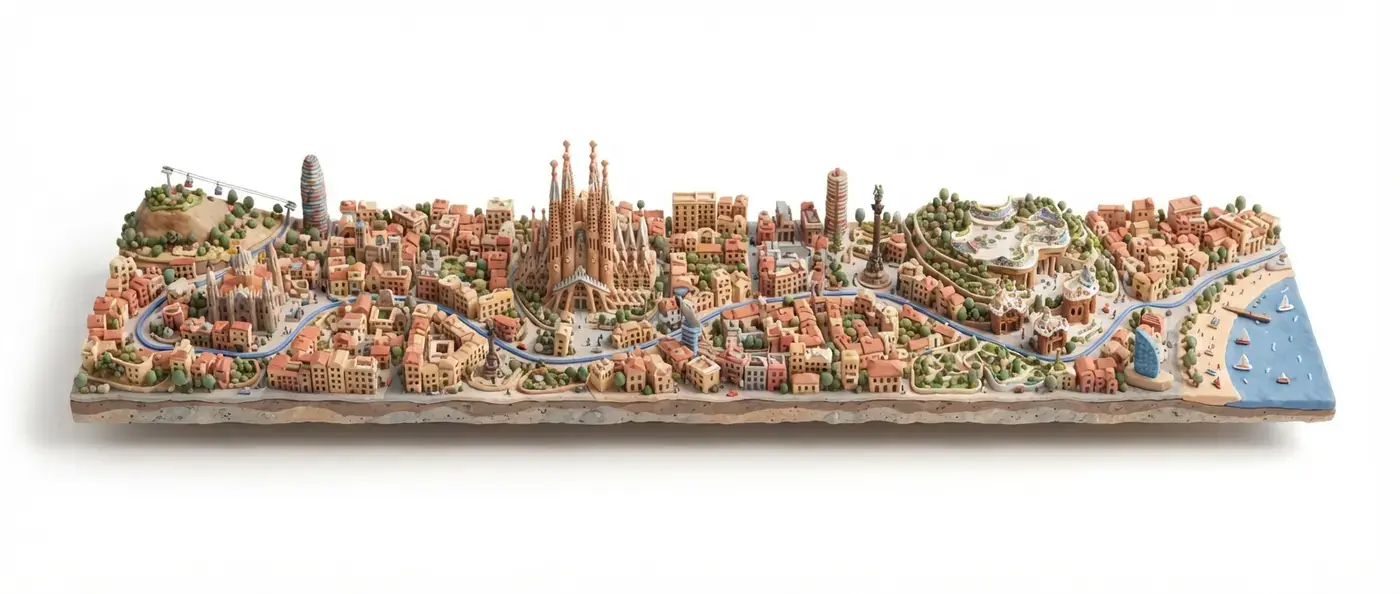
Every stop has its own page with opening days, ticket price, how to get there and where it fits in the itineraries.
Eixample and Sagrada Família
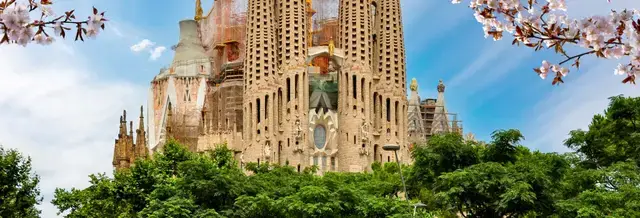
Gaudí's unfinished basilica, still under construction. The visit covers the interior with its tall columns and stained glass. The towers are a separate add-on.
Book aheadGràcia and Park Güell
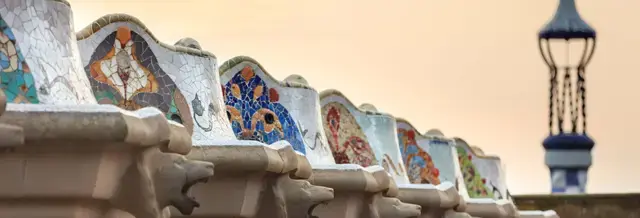
Gaudí's hillside park, with the mosaic terrace, the colonnade and views over the city. The paid Monumental Zone is a small part of the hill; the surrounding paths are walks on the slope.
Book aheadEixample and Sagrada Família
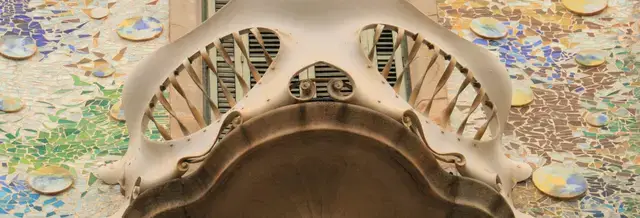
A Gaudí apartment building on Passeig de Gràcia with a bone-like facade and a blue-tiled light well. You follow a route through the main floor, the loft and the roof, with a multimedia guide.
Booking advisedGothic Quarter and La Rambla
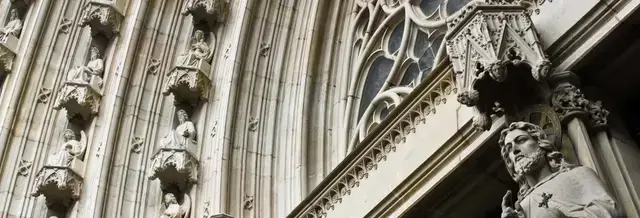
The medieval and Roman core of the city, with narrow lanes, small squares and the cathedral at its centre. It is a walk rather than a ticketed visit, and it connects Plaça Sant Jaume, Plaça del Rei and the old Jewish quarter.
Gothic Quarter and La Rambla
The tree-lined pedestrian boulevard that runs from Plaça de Catalunya down to the port. Most visitors walk it once to reach the Boqueria and the old town. Keep a hand on your bag in the crowd.
Eixample and Sagrada Família
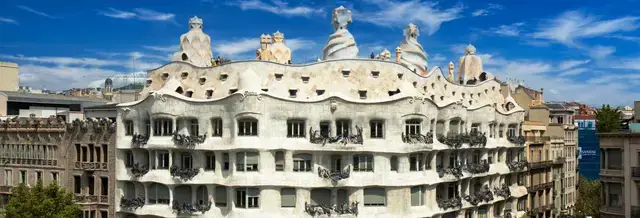
Gaudí's wavy stone building on Passeig de Gràcia. The visit takes in the rooftop with its chimneys, the attic exhibition on Gaudí and a furnished apartment from the early 20th century.
Booking advisedGothic Quarter and La Rambla
The Gothic cathedral of the old town, with a cloister that has a pond and a flock of white geese. The ticketed visit adds the choir, the crypt and the roof terrace.
El Born and the waterfront
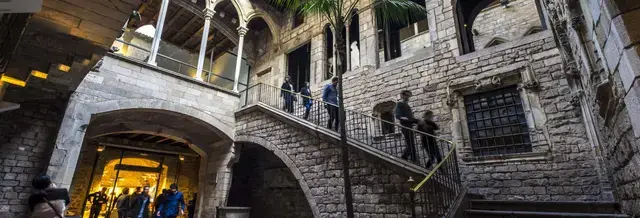
A museum in five connected medieval palaces in El Born. It holds a large collection of Picasso's early work, including the studies and variations on Las Meninas.
Booking advisedGothic Quarter and La Rambla
The big covered food market on La Rambla, with fruit stalls, seafood counters and small bars. It works as a quick snack stop rather than a long visit.
Montjuïc
A fortress on the hill above the port, with ramparts, a courtyard and wide views over the harbour. You reach it by cable car or by walking up through the park. The exhibitions inside are short.
Gothic Quarter and La Rambla
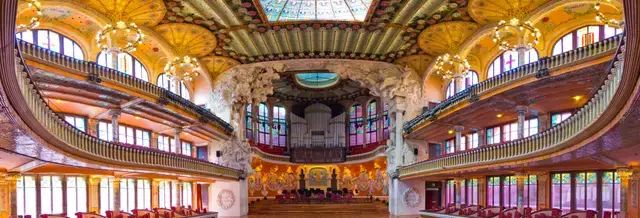
A concert hall in the Modernista style, with a stained-glass ceiling and a lavish main auditorium. The visit is a guided tour of about 50 minutes, with audio-guided and self-guided options.
Booking advisedEl Born and the waterfront
A 14th-century Catalan Gothic church in El Born with a plain, tall interior. The paid cultural visit adds the roof terraces, the towers, the crypt and the gallery museum.
Eixample and Sagrada Família
A former hospital complex of tiled pavilions joined by underground tunnels, designed by Lluís Domènech i Montaner. The self-guided visit walks through the gardens and several restored buildings.
El Born and the waterfront
A large city park near the old town with a pond, a big fountain, shaded paths and a playground. The zoo and the Catalan parliament are inside it.
El Born and the waterfront
The old fishermen's district between the port and the beach. It has narrow gridded streets, seafood restaurants and a long city beach at its edge. It is a short walk from El Born.
Gràcia and Park Güell
A former village that now sits inside the city, with small squares such as Plaça del Sol and Plaça de la Vila. It is local in character, with terraces, independent shops and few big monuments.
Wi-Fi in hotels, cafés and airports is shared with other guests. A VPN encrypts the connection between your phone or laptop and the VPN's server, which helps when you check email or your bank on the road.
See NordVPNOne day lets you see the Sagrada Família, walk the old town and cross La Rambla. You will have to skip Park Güell and most of the museums. Book the Sagrada Família time slot before you go.
The Sagrada Família sells tickets online only and Park Güell sells timed slots in advance. Casa Batlló, La Pedrera, the Picasso Museum and the Palau de la Música do not require booking in every case, but advance tickets are recommended. The Gothic Quarter, La Rambla, Barceloneta and Gràcia are free to walk.
The Picasso Museum is closed on Mondays and the Boqueria market is closed on Sundays. The cathedral tourist visit only runs in the afternoon on Sundays, and Santa Maria del Mar opens later on Sundays. Plan around these days when you set your order.
The old town, La Rambla, El Born and the Boqueria are within walking distance of each other. The Sagrada Família, Park Güell and Montjuïc are each in a different part of the city and need the metro or a bus, so group them by area.