One day in Rome
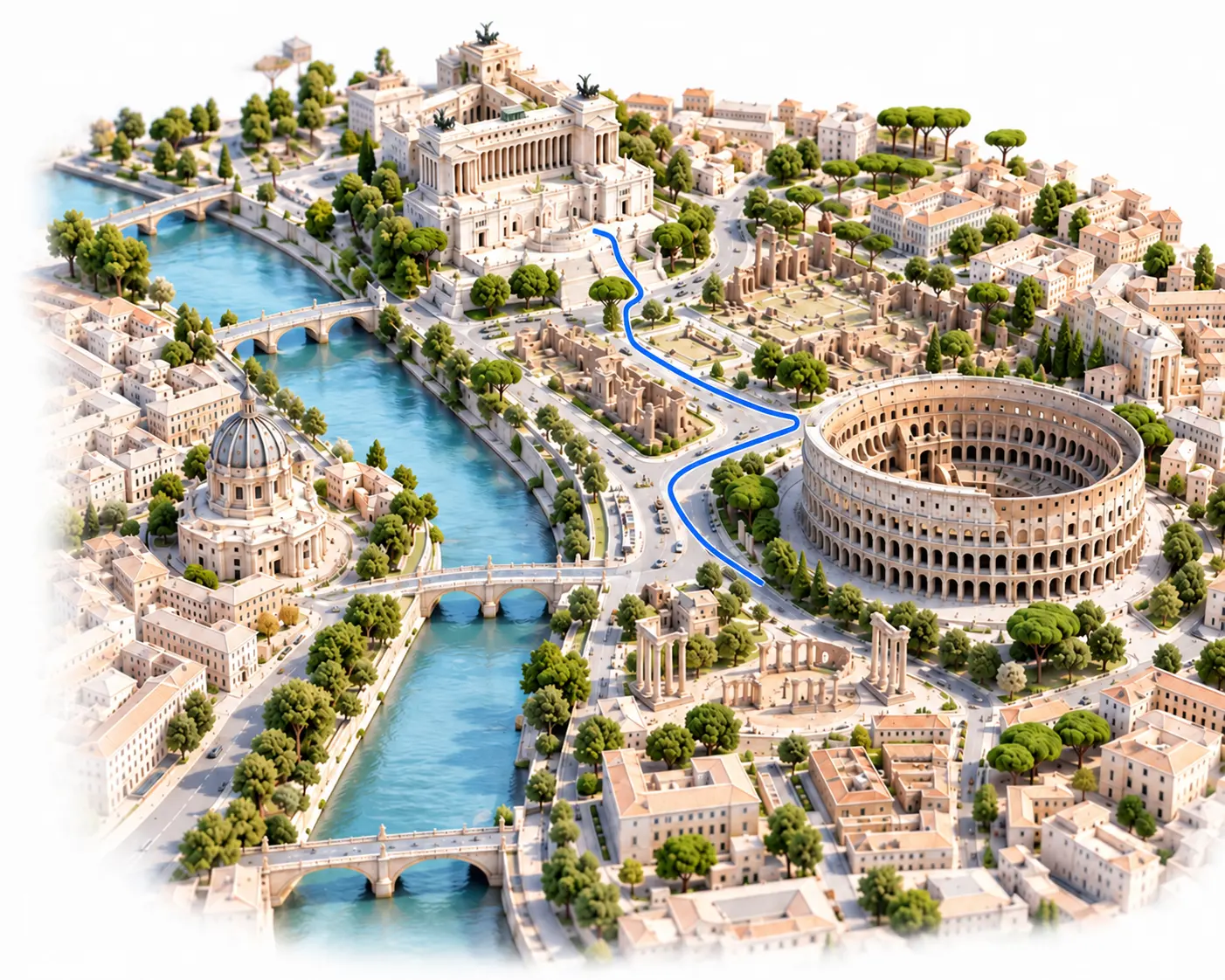
4 stops, about 30 min of walking in total.
- Day 1: Vatican and Borgo · Ancient Rome and Capitoline HillSt Peter's Basilica → Colosseum → Roman Forum and Palatine Hill → Piazza NavonaOpen in Google Maps
Italy
Rome keeps its ancient core, the Vatican and its Baroque squares in separate districts, linked by long walks and short metro or bus rides. Most visits are built around two or three booked entries, with wandering and meals in between.
Data checked on October 4, 2026
Free walking tour
A guided walk gives you the layout of Rome before you go off on your own. You book a place for free and tip the guide at the end.
See the free tourTickets and tours you book online with a booking partner, each with a photo from the partner.
Partner link, opens in a new tab.
Each plan is built from the stop base, with visit time, the walk between stops and a lunch break. Open one and set your pace and arrival day.
4 stops, about 30 min of walking in total.
8 stops, about 1 h 05 of walking in total.
14 stops, about 2 h 12 of walking in total.
April, May, June, September and October give the best mix of mild weather and manageable queues. Highs run from 20 to 30 degrees in those months and rain falls on six or seven days a month at most. July and August reach 33 degrees and are the busiest months, and Easter week fills the centre in spring. November and December are the wettest, with about nine rain days a month.
Climate averages: ISPRA SCIA, period 1991 to 2020.
9 to 21 °C · about 7 rainy days a month
March is still cool, with a high of 17 degrees, April reaches 20 and May is warm at 25. Rain days fall from seven in April to six in May. Easter week and the long weekends around 25 April and 1 May are busy.
What to wear: Layers, a light waterproof for March and April, and comfortable shoes for the cobbles.
19 to 32 °C · about 2 rainy days a month
Hot and dry, with highs of 30 to 33 degrees from June to August and only two or three rain days a month. Midday is hard going on the open sites, and the main sights are crowded. Some small local businesses close for a week or two around mid August.
What to wear: Light cotton, a hat, sunscreen and a refillable bottle, with shoulders and knees covered for churches.
12 to 23 °C · about 7 rainy days a month
September is still warm, with a high of 28 degrees, and October eases to 23. Rain days rise from six in September to seven in October and nine in November. The crowds ease from October.
What to wear: Layers, a folding umbrella from October and shoes that grip on wet stone.
3 to 13 °C · about 8 rainy days a month
Cool and damp, with highs of 13 or 14 degrees and lows of 3 or 4. December has nine rain days and January eight. Queues are at their shortest and the ruins are quiet, but daylight ends before 17:00 in December.
What to wear: A warm coat, a waterproof layer and closed shoes, because stone churches and museums stay cold inside.
Rain days reach nine a month in November and December, and the stone paving turns slick. The Vatican Museums, the Capitoline Museums, the Borghese Gallery and Castel Sant'Angelo are all indoors, and the Pantheon and St Peter's give shelter too. Keep the Forum, the Palatine and the parks for the dry spells, since they have almost no cover.
Stops under a roof
From June to August highs reach 30 to 33 degrees, and the Forum, the Palatine and the upper levels of the Colosseum have little shade. Do the open air ruins in the first hours after opening, move into museums and churches from noon to 16:00, and come back to the squares in the evening. Public drinking fountains, called nasoni, run all over the centre, so carry a bottle and refill it.
Better outdoors
Per person, without the hotel. Tickets are the prices of the stops in each plan, read on the official sites. Food and transport come from the city figures.
| Plan | Tickets | Transport | Food | Total |
|---|---|---|---|---|
| 1 day | €36 | €8.50 | €32 to €49 | €76 to €93 |
| 2 days | €81 | €17 | €64 to €97 | €162 to €195 |
| 3 days | €115.50 | €25.50 | €96 to €146 | €237 to €287 |
Pasta with pecorino romano and black pepper, and nothing else. Trattorias serve it at lunch and dinner.
Pasta with egg, cured pork cheek and pecorino, made without cream. It is a Roman dish, so ordering it here is the right call.
A fried rice ball with tomato sauce and a core of melted mozzarella. It is sold at fry counters and eaten in the street between meals.
Roman pizza baked in large trays and cut into rectangles, usually sold by weight. A quick lunch, eaten standing at a counter.
Whole artichokes fried until the leaves turn crisp, a dish from the old Jewish quarter by the river. Best in spring, when artichokes are in season.
A soft sweet bun split and filled with whipped cream. Romans eat it for breakfast with a cappuccino.
Bars in the lanes pour from early evening, and many put out snacks with the first drink. It is a slow way to spend the hour before dinner.
The old Roman road south of the centre has a limited traffic zone on Saturdays and Sundays outside August, which makes it easier to walk or cycle. Tombs and catacombs line the route.
A terrace on the Aventine hill with a view across the Tiber to St Peter's dome. The keyhole in a nearby gate frames the dome, and it draws a queue at busy times.
Walk from Piazza Navona through the old quarter, past the ruins of a Roman portico, and cross to the island in the river. The whole loop takes about an hour.
Go from Trevi to the Pantheon and on to Piazza Navona after dark, when the squares are lit and quieter. The route is about 25 minutes without stops.
Fiumicino airport reaches Termini station by a direct train in about half an hour, and several coach companies run the same route. Ciampino airport, used by many budget carriers, is linked to Termini by shuttle coaches. Termini is the main station, on Metro Lines A and B, with buses to most of the centre.
The centre is walkable, but the distances between the Colosseum, the squares and the Vatican add up to long days on foot. Metro Line A serves the Spanish Steps and the Vatican and Line B serves the Colosseum, while the Pantheon and Piazza Navona have no station, so buses and tram 8 fill the gaps. A day pass only pays off if you plan several rides in a day, and the operator's fares page lists the current single and day tickets.
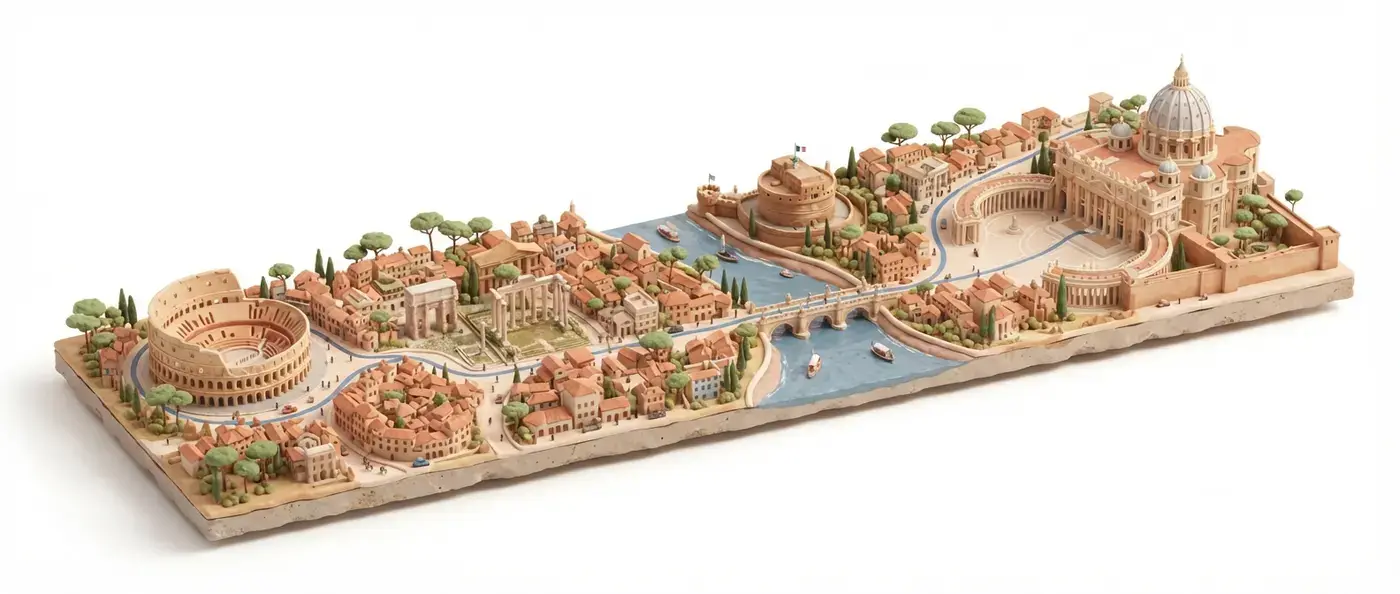
Every stop has its own page with opening days, ticket price, how to get there and where it fits in the itineraries.
Ancient Rome and Capitoline Hill
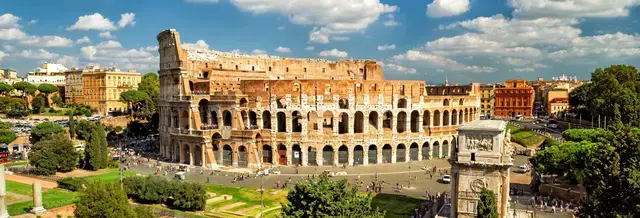
The Roman amphitheatre, with a walk through the upper and lower levels and a view over the arena floor. Expect a security check at the entrance.
Book aheadAncient Rome and Capitoline Hill
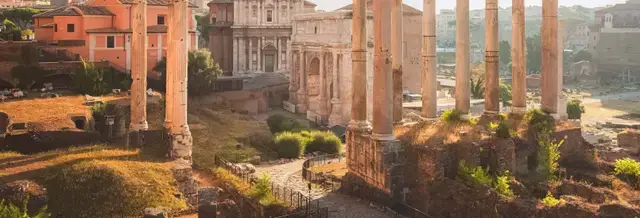
The ruins of the old civic centre, with the Palatine Hill above it. It is a large open site with little shade and uneven ground.
Booking advisedVatican and Borgo
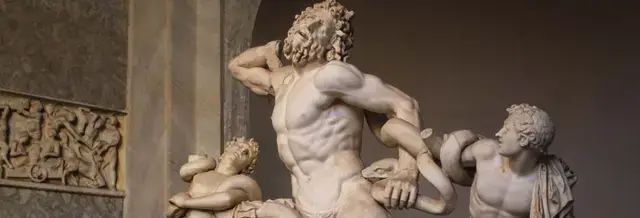
A long route of galleries that ends in the Sistine Chapel. Most visitors follow one fixed path, so the pace is set by the crowd.
Booking advisedVatican and Borgo
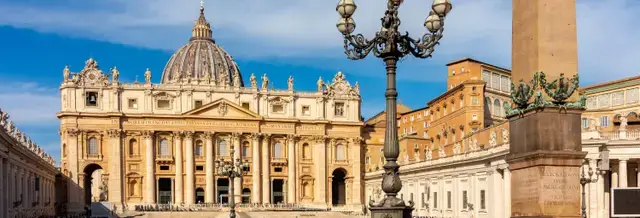
The largest church in Rome, free to enter, with Michelangelo's Pietà near the entrance. Strict dress code: covered shoulders and knees.
Booking advisedHistoric centre
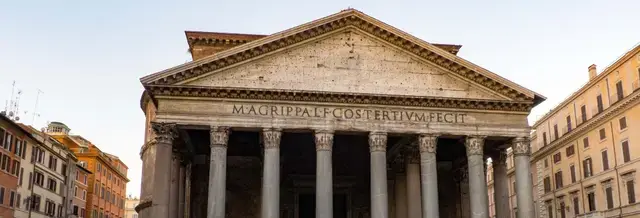
A Roman temple turned church, with a concrete dome and an open oculus at the top. A short visit, but the queue can take longer than the interior.
Booking advisedHistoric centre
The Baroque fountain that fills a small square at the end of narrow streets. You can see it from the piazza at any hour; the basin area closest to the water needs a ticket.
Spanish Steps and Villa Borghese
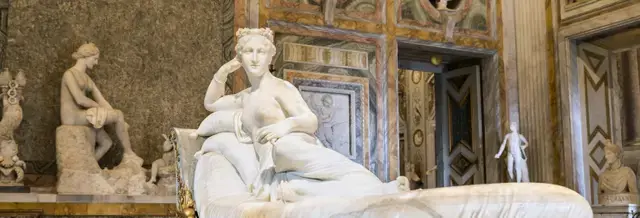
A small museum of sculpture and paintings in a villa, including Bernini's marble groups. Visits follow a fixed time window, so there is no wandering in and out.
Book aheadVatican and Borgo
A round fortress that began as an emperor's tomb, with papal apartments inside and a terrace over the Tiber and St Peter's dome. It pairs well with a Vatican morning.
Booking advisedHistoric centre
A long Baroque square built on the shape of an ancient stadium, with Bernini's Fountain of the Four Rivers in the middle. Street artists and cafes fill the edges.
Ancient Rome and Capitoline Hill
Ancient sculpture and paintings in two palaces on Michelangelo's square, with a view over the Forum from the upper floor. A good indoor option on a wet day.
Spanish Steps and Villa Borghese
A wide 18th-century staircase from Piazza di Spagna up to the church of Trinità dei Monti. The view from the top is the reason to climb.
Trastevere and Janiculum
A district across the Tiber with narrow lanes, ivy-covered houses and trattorias. The Basilica of Santa Maria in Trastevere, with its medieval mosaics, is the main sight.
Trastevere and Janiculum
A hilltop promenade with one of the best views over the historic centre. Monuments to Garibaldi line the way, and a cannon is fired at noon each day.
Spanish Steps and Villa Borghese
Rome's large central park, with lawns, ponds, fountains and a few museums. The Pincio terrace looks over Piazza del Popolo and the rooftops.
Historic centre
A square with a daily food market in the morning and a loud bar scene at night. Good for fruit, spices and a coffee standing at the counter.
Wi-Fi in hotels, cafés and airports is shared with other guests. A VPN encrypts the connection between your phone or laptop and the VPN's server, which helps when you check email or your bank on the road.
See NordVPNOne day covers the ancient core and a walk through the centre, but you will have to choose between the Vatican and the Colosseum area. Book timed entries first and leave the squares for the gaps.
Plan a morning for the Vatican Museums and a shorter visit for St Peter's Basilica, ideally on the same day since they sit side by side. The museums are closed on most Sundays, so choose another day.
The Colosseum and the Borghese Gallery use timed entry, so book them ahead. The Vatican Museums, the Pantheon and Castel Sant'Angelo are easier with a reserved ticket, since the queue at the door can be long.
Not all of them. The Vatican Museums close on Sundays apart from the last Sunday of the month, and some museums close one weekday. Check the official page for the stops that are flagged as unconfirmed before you fix a day.