Cádiz · Cathedral and Pópulo
Roman Theatre of Cádiz
The oldest Roman theatre on the Iberian Peninsula, entered through an interpretation centre on Calle Mesón.
- 1 h
- Free
- Booking: not needed
- Cathedral and Pópulo
Data checked on November 13, 2026
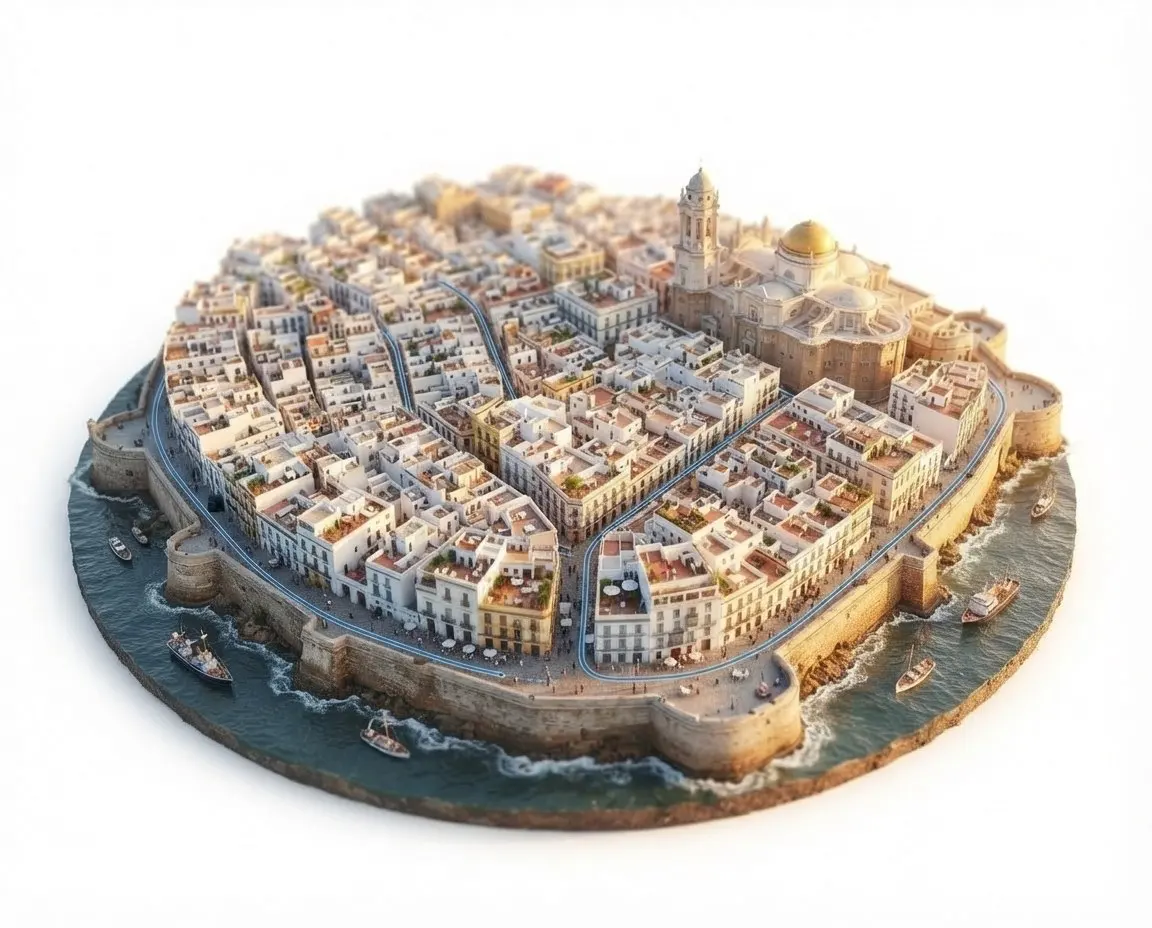
The theatre was built in the 1st century BC by Lucio Cornelio Balbo el Menor and was found in 1980. With a diameter of almost 120 metres it was the second largest in the peninsula after Córdoba and held more than 10,000 spectators. The Theatrum Balbi interpretation centre explains the ruins within the Roman city of Gades and the medieval and modern Pópulo quarter, with panels, models and audiovisual material. Parts of the stage building can be seen through test pits in the centre.
What to look for
- Oldest Roman theatre in the peninsula
- Terraces and orchestra
- Models and audiovisuals of Roman Gades
- Parts of the stage building through test pits
Opening hours
| Monday | 10:00 am–4:30 pm | last entry 4:15 pm |
|---|---|---|
| Tuesday | 10:00 am–4:30 pm | last entry 4:15 pm |
| Wednesday | 10:00 am–4:30 pm | last entry 4:15 pm |
| Thursday | 10:00 am–4:30 pm | last entry 4:15 pm |
| Friday | 10:00 am–4:30 pm | last entry 4:15 pm |
| Saturday | 10:00 am–4:30 pm | last entry 4:15 pm |
| Sunday | 10:00 am–2:00 pm | last entry 1:45 pm |
From 1 October to 31 March the site opens Monday to Saturday from 10:00 to 16:30 and on Sunday from 10:00 to 14:00. From 1 April to 30 September it opens Monday to Saturday from 11:00 to 17:00 and on Sunday from 10:00 to 14:00. Entry stops 15 minutes before closing. It is closed on the first Monday of each month and on several holidays, including 1 and 2 November and 24, 25 and 31 December. Expansion works currently restrict access to the excavation, while the interpretation centre is open.
Source: Junta de Andalucía (Teatro Romano de Cádiz), checked November 13, 2026
Tickets and booking
Free. Free. Access is allowed up to a limit of 15 people at a time.
Getting there
Tip
Entry is limited by capacity, so avoid going just before closing. If the excavation is still restricted, the interpretation centre and its models are the visit.